




| November 10, 2026
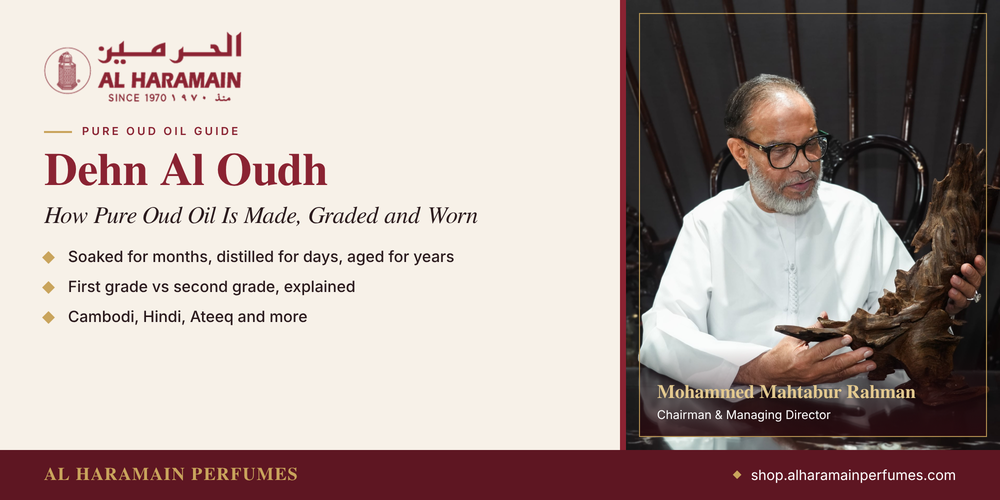
Al Haramain has traded Dehn Al Oudh since its first store opened in Makkah in 1970, and its Dehnal Oudh range still sits at the heart of the collection today. This guide explains what the oil is, how it is made, how the grades differ, which types to know and how to wear it well.
Dehn Al Oudh means “oil of oud” in Arabic. It is the pure oil distilled from agarwood, the dark, resin-filled heartwood of the Aquilaria tree. You may see it written in several ways, including Dehn Al Oudh, Dehnal Oudh and Dahn Al Oud, but they refer to the same oil.
Agarwood is burned as chips to scent a room. Dehn Al Oudh is different: it is worn directly on the skin and clothes. Because it is the concentrated essence of the wood, it is one of the most precious materials in perfumery. To learn about the wood it comes from, explore Al Haramain’s agarwood collection, with origins, grades and rare pieces.
Many fragrances have “oud” in the name, but most are perfumes in which oud is one note among many, usually in an alcohol-based spray. Dehn Al Oudh is the oil itself. It is thicker and more concentrated, and sits close to the skin rather than filling a room.
Neither is better; they serve different purposes. A spray gives a stronger opening and a wider scent trail, while Dehn Al Oudh gives a closer, slower-fading scent that can last through the day.
Making Dehn Al Oudh is slow work, and each stage shapes the finished oil. At Al Haramain, the process moves through four stages.
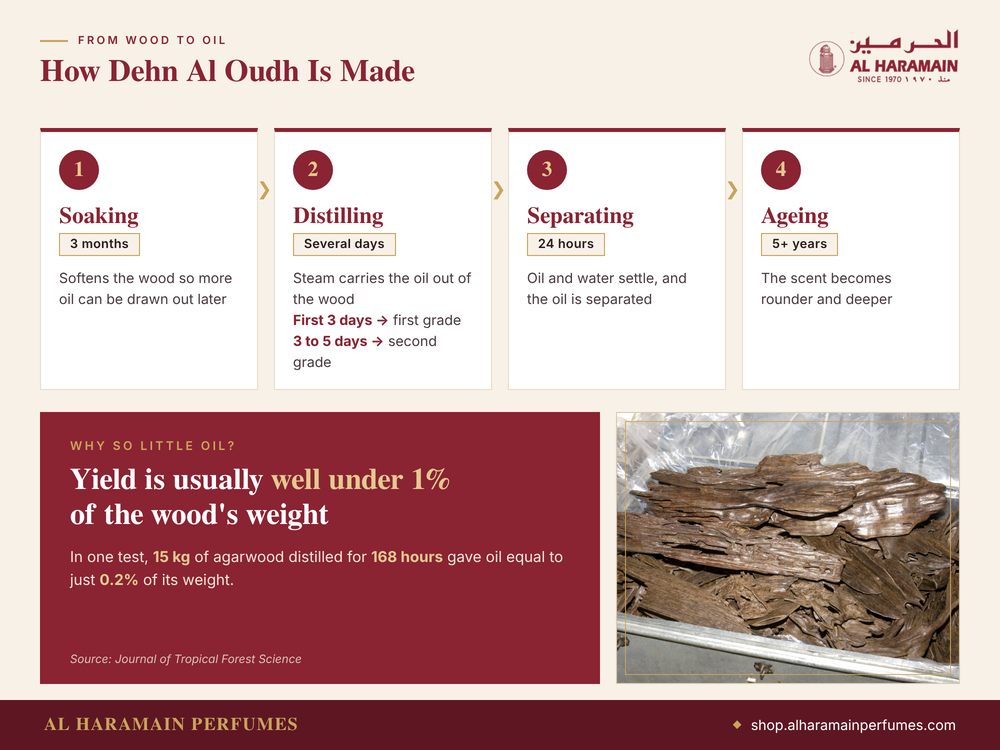
The yield of oud oil is tiny, usually well under one percent of the wood’s weight. A small bottle can therefore require many kilograms of agarwood. A study cited in the Journal of Tropical Forest Science describes a test in which 15 kg of water-soaked agarwood was distilled for 168 hours and produced oil equal to just 0.2 percent of the wood’s weight.
Add the rarity of good agarwood, the months of soaking and the years of ageing, and it is easy to understand why pure oud oil can cost more per gram than gold.
Distillation runs over several days, and the oil is collected in stages. The time of collection determines its grade.
| First grade | Second grade | |
|---|---|---|
| When collected | During the first three days of distillation | After three to five days of distillation |
| How it is regarded | The finest and most prized oil from the batch | Pure oud oil from the same wood, collected later |
| Best for | Special occasions, collectors and gifts | Regular wear and anyone starting out with oud oil |
The first collection is regarded as the finest oil of the batch. Both grades are genuine Dehn Al Oudh distilled from real agarwood, so the right choice depends on how and when you plan to wear it. If you are unsure, ask a showroom team member to help you compare both on your skin.
Just as agarwood from each country smells different, so does the oil distilled from it. The age and origin of the wood give each Dehn Al Oudh its character. Al Haramain makes oils from the origins in its collection, including wood from the deep forests of Bangladesh and Bhutan.
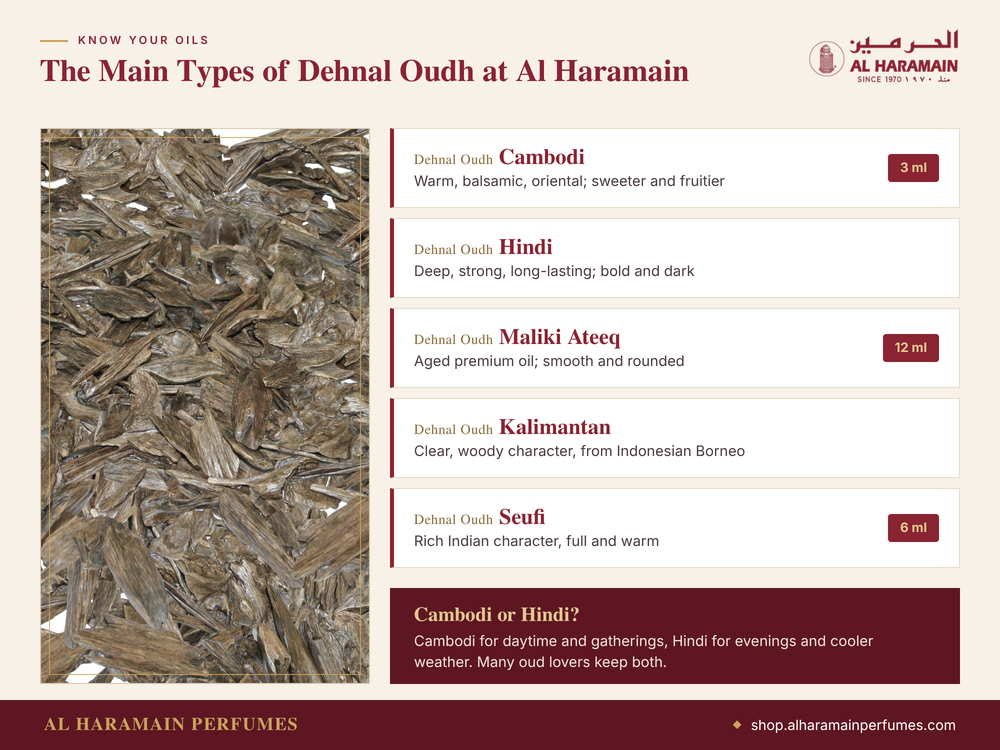
Distilled from Cambodian agarwood, Cambodi is warm, balsamic and oriental, with a sweeter and fruitier character. Its approachable profile makes it one of the easier oud oils to get to know. Al Haramain’s Dehnal Oudh Cambodi comes in a 3 ml bottle, a practical size for a first oil.
Hindi oud comes from Indian agarwood. It is deep, strong and long-lasting, with a darker, bolder character that many traditional oud lovers seek.
Ateeq means “aged.” Maliki Ateeq is an aged premium oud oil, smoother and more rounded after years of rest. It comes in a 12 ml bottle and is one of the most treasured oils in the range.
Distilled from Indonesian agarwood from Kalimantan, the Indonesian part of Borneo, this oil has a clear, woody character.
Seufi has a rich Indian oud character, full and warm on the skin. Al Haramain’s Dehnal Oudh Seufi comes in a 6 ml bottle.
Cambodi suits daytime wear and gatherings, while Hindi comes into its own in the evening and in cooler weather. Many oud lovers keep both.
Unlike most perfumes, pure Dehn Al Oudh can remain stable for many years when stored well. It contains no alcohol or water, and can become smoother and deeper as it rests. Oils that have been aged for a long time are called ateeq, and they are among the most prized in the Gulf.
That is why “Ateeq” appears in the names of several Al Haramain oils, including Maliki Ateeq and Dehnal Oudh Bormi Ateeq. An aged oil is a classic choice for weddings and for someone who already knows and loves oud.
Oud oil has traditionally been sold by the tola, a South Asian unit of weight. One tola is about 11.66 grams, and a tola bottle of oud oil usually holds about 12 ml. You may still hear prices quoted per tola in oud shops across the region, along with half and quarter tolas.
Prices for pure oud oil can vary widely, from roughly US10toUS500 per gram. A few factors affect where an oil sits in that range:
At the time this guide was prepared, a 3 ml Dehnal Oudh Cambodi was about US37ontheglobalonlinestore, whilea12mlDehnalOudhMalikiAteeqwasaboutUS430. Prices can change; check the store for current pricing.
Dehn Al Oudh is very concentrated, so a small amount is enough for the whole day.
Put a drop on your wrist and spread it gently. Touch a little behind your ears and on your neck. The oil warms with your body and releases its scent slowly, staying close rather than filling the room.
After applying the oil to your skin, run your palms lightly over your clothes. Good Dehn Al Oudh can last even longer on fabric than on skin. Take care with white or delicate fabrics, as oil can leave a mark.
In the Gulf, Dehn Al Oudh is often the first layer of a fragrance ritual. Apply the oil first, then pass your clothes through the smoke of agarwood or bukhoor, or add a light spray of perfume. The oil gives depth, while the smoke or spray adds presence.
Keep the bottle upright and tightly closed, away from heat and sunlight. A cupboard or drawer at room temperature is ideal; a hot car or sunny windowsill is not. Stored well, Dehn Al Oudh lasts for many years and may develop further with age.
If you are new to oud oil, a few simple steps can make choosing easier:
Dehn Al Oudh means “oil of oud” in Arabic. It is the pure oil distilled from agarwood, the fragrant resin-filled wood of the Aquilaria tree. It is also written Dehnal Oudh or Dahn Al Oud; all three spellings refer to the same thing. It is worn on the skin and clothes, unlike agarwood chips, which are burned.
Yes. Pure Dehn Al Oudh is an oil, not an alcohol-based spray, so it contains no alcohol. That is one reason it is popular for prayer and with people who prefer alcohol-free fragrance. If you are buying a spray with “oud” in its name, check the label, as sprays are usually alcohol-based.
The difference is when the oil is collected during distillation. First-grade oil is collected in the first three days and is considered the finest of the batch. Second-grade oil is collected after three to five days. Both are pure oud oil distilled from the same agarwood, so second grade can be a good choice for regular wear.
Cambodi oud oil comes from Cambodian agarwood and is usually sweet, fruity and balsamic. Hindi oud oil comes from Indian agarwood and is darker, stronger and deeper. Many people wear Cambodi during the day and at gatherings, and keep Hindi for evenings and cooler weather. Trying both on your skin is the best way to find your preference.
Pure Dehn Al Oudh contains no alcohol or water, so it can remain stable for many years and may become smoother and deeper with age. Aged oils, known as Ateeq, are prized for this reason. Store the bottle upright, tightly closed and away from heat and sunlight.
Good Dehn Al Oudh can last all day on the skin and often longer on clothes. How long it lasts depends on the oil, its grade and age, your skin and the weather. Higher grades and aged oils often last longest. Because the oil sits close to the skin, you may stop noticing it before people around you do.
Good agarwood is rare, and the oil yield is tiny, usually well under one percent of the wood’s weight. The wood is soaked for months, distilled for days and aged for at least five years before the oil is at its best. Rare origins, first-grade oil and long-aged Ateeq oils cost the most, which is why pure oud oil can cost more per gram than gold.
Very little. One drop on the wrist, spread gently and touched behind the ears and on the neck, is enough for most people for the whole day. Start with less than you think you need, as oud oil is highly concentrated and can feel strong in closed spaces. You can always add a little more later.
Dehn Al Oudh is one of the oldest and most treasured fragrances in the Arab world: wood soaked for months, distilled for days and aged for years, all for a few drops of oil. Whether you choose a sweet Cambodi, a bold Hindi or a smooth Ateeq, a little goes a long way. To find your preferred oil, browse Al Haramain’s Dehnal Oudh collection or visit a showroom to compare the oils on your skin.


