Perfume Oil vs Perfume Spray: Which Lasts Longer and When Should You Use Each?
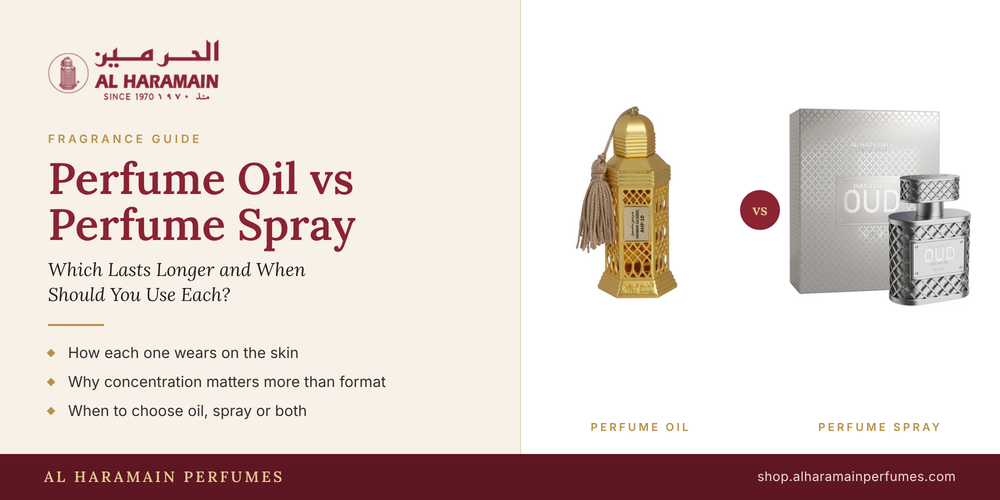
Stand at any perfume counter in the UAE for long enough and you'll hear the same question. Should I get the oil or the spray? Often it's the same fragrance, sitting side by side in two very different bottles: a small, heavy glass vial with a roll-on or dabber, and a tall atomiser that fills the air the second you press it.
Ask five people which is better and you'll get five confident answers. Oil lovers will tell you sprays vanish by lunchtime. Spray fans will say oils are too faint to notice. Both have a point, and neither is the whole story.
Here's what actually happens when you wear each one, which lasts longer, and how to choose between them depending on where you're going and what the weather is doing.
The Quick Answer
- Perfume oils stay close to the skin and usually fade more slowly. People notice them when they're near you.
- Perfume sprays open with more energy and project further. They tend to fade faster, especially in heat.
- Concentration matters more than format. A rich, concentrated spray can outlast a light oil.
- You don't have to choose. Many people in the Gulf wear an oil underneath and a spray on top.
What Is a Perfume Oil?
A perfume oil is fragrance blended into an oil base rather than alcohol. It usually comes in a small bottle with a roll-on, a glass dabber or a stick applicator, and you apply it directly to the skin.
In the West, perfume oils are sometimes sold as a new idea. In the Gulf, they're anything but. Concentrated oils, often called attar, and blended oils known as mukhallat have been worn across the region for centuries, long before alcohol-based sprays arrived. For many families, a small bottle of oil is still the fragrance they reach for before prayer, a wedding or a family visit.
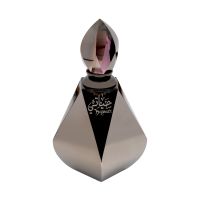
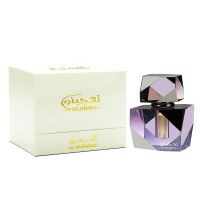
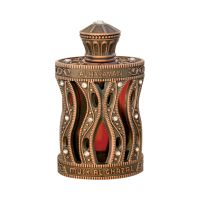
Al Haramain's range of concentrated perfume oils covers everything from pure oud and musk to floral and spicy blends, in sizes small enough to carry in a pocket.
How a Perfume Oil Wears on Skin
Without alcohol to lift it into the air, an oil stays where you put it. It warms with your body and releases its scent slowly, so it builds a soft, close layer of fragrance rather than a cloud. You'll smell it when you move, lean in or raise your wrist. The people around you will notice it when they're near you, not from across the room.
What Is a Perfume Spray?
A perfume spray is fragrance dissolved in alcohol, usually with a little water. The amount of fragrance in the mix gives each spray its name. Eau de toilette is lighter, eau de parfum is richer, and extrait de parfum is the most concentrated of the three.
The alcohol does an important job. It carries the fragrance onto your skin in a fine mist and then evaporates quickly, which is what creates that bright first impression and the trail of scent you leave as you walk. You'll find this style across Al Haramain's range of perfume sprays.
How a Spray Wears on Skin
The first few minutes are the loudest. As the alcohol evaporates, the lighter top notes fly off first, then the heart of the fragrance comes through, and finally the base notes settle on your skin for the rest of the day. A spray projects more than an oil, so it's the better choice when you want your fragrance to be noticed.
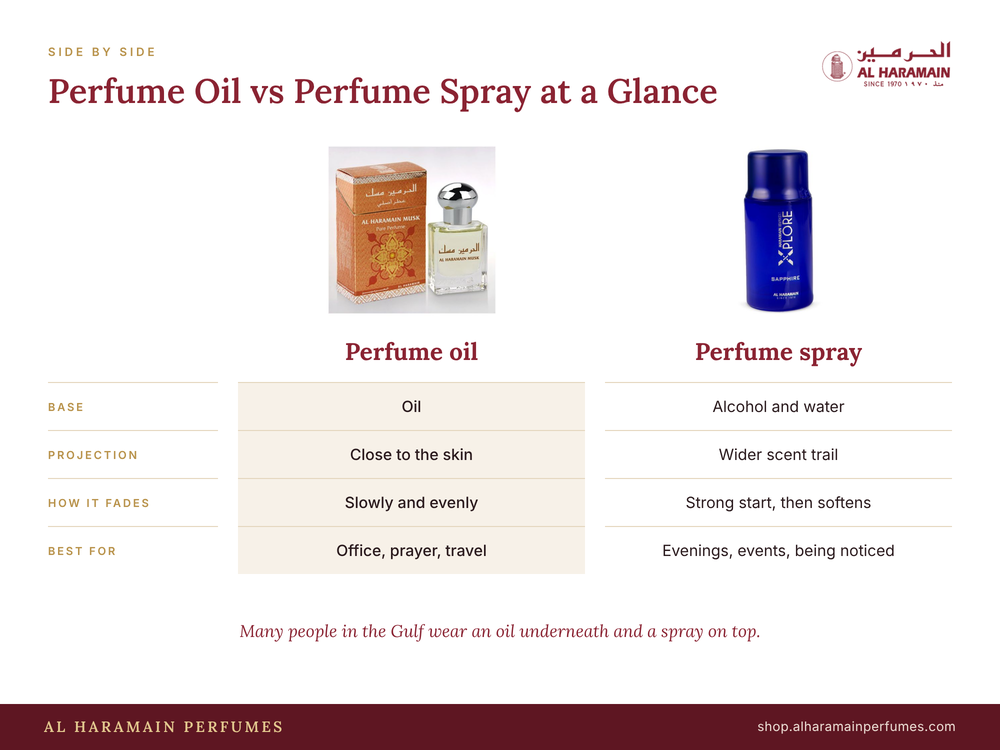
Perfume Oil vs Spray: Side by Side
| Feature | Perfume oil | Perfume spray |
|---|---|---|
| Base | Oil | Alcohol and water |
| How you apply it | Dab or roll onto skin | Spray onto skin or clothes |
| Projection | Close to the skin | Wider scent trail |
| How it fades | Slowly and evenly | Strong start, then softens |
| Feel on skin | Slightly silky | Dries quickly |
| Best in heat | A light layer on cooler spots | Fewer sprays, fresher scents |
| Best for | Close settings, prayer, office, travel | Evenings, events, being noticed |
| Travel | Small, easy to carry | Larger, may need a travel size |
Which Lasts Longer?
In most cases, a perfume oil lasts longer on the skin than a spray of similar strength. Oil evaporates more slowly than alcohol, so the fragrance has nothing pulling it off your skin quickly.
But that's only part of the answer. A light, fresh oil can fade before a dense, ambery eau de parfum, and a concentrated extrait spray can comfortably last through a long day. The format matters, but it isn't the deciding factor.
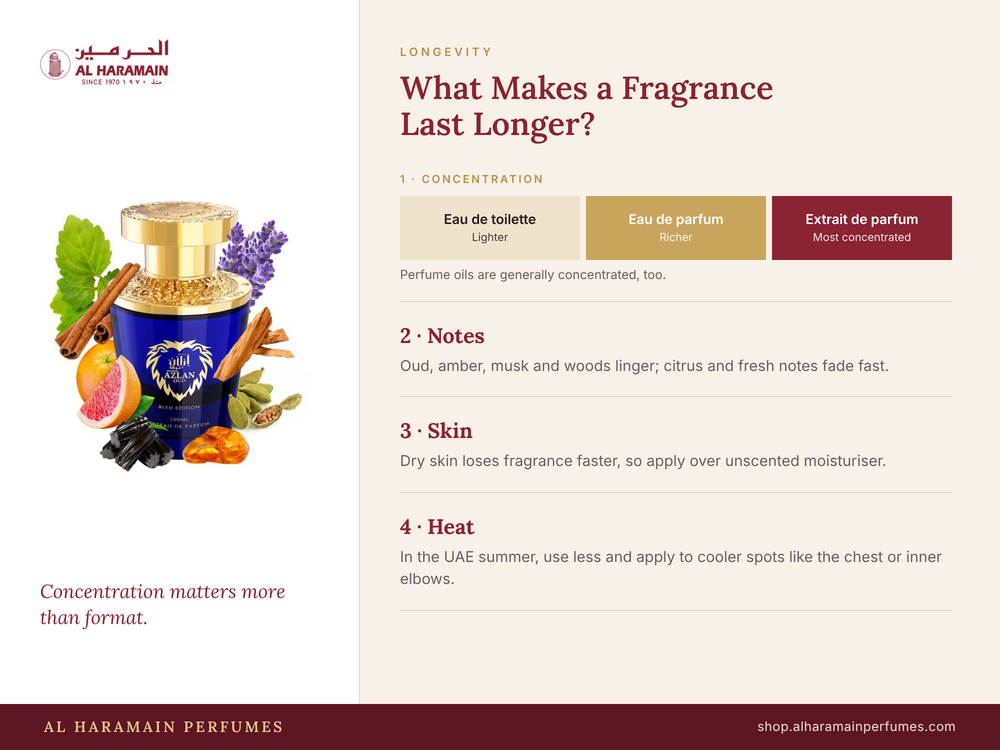
Concentration Matters More Than Format
The more fragrance there is in the bottle, the longer it tends to last. That's true whether the carrier is oil or alcohol. An eau de toilette will usually fade faster than an eau de parfum, and an eau de parfum faster than an extrait. Perfume oils are generally concentrated, which is a big part of why they have a reputation for lasting. Compare a strong oil with a strong spray, though, and the gap is smaller than many people think.
Notes, Skin and the UAE Heat
What the perfume is made of matters just as much. Heavier base notes such as oud, amber, musk and woody fragrances linger, while citrus and fresh notes are naturally fleeting, in an oil or a spray.
Your skin plays a part too. Dry skin tends to lose fragrance faster, so applying perfume over a little unscented moisturiser can help it hold.
Then there's the weather. Heat speeds up evaporation, which is why a spray can seem to disappear on a summer afternoon in Dubai. Gulf News suggests spraying less than usual in the UAE summer and adding fragrance to cooler spots such as the chest or inner elbows, not just the warmest pulse points. The same heat affects the bottle on your shelf, so it's worth knowing how to store perfume in UAE heat.
Strength vs Projection: Why Oils Can Feel Quieter
A lot of people buy their first perfume oil, wear it for an hour and decide it's stopped working. Usually it hasn't.
Strength and projection aren't the same thing. An oil can be rich in fragrance and still stay close to your body, because there's no alcohol throwing the scent into the air around you. After a while, your nose also gets used to a scent it has been smelling all morning and stops registering it. Ask someone sitting next to you, or smell your wrist after stepping outside for a minute, and you'll often find it's still there.
So a quiet perfume isn't always a weak one. It's just more personal.
The Downsides of Each
Neither format is perfect, and it's worth knowing the trade-offs before you buy.
Perfume oils
- They can mark light or delicate fabrics if they touch clothing before they've settled into your skin.
- They project less, so they're not the best choice if you want your fragrance to be noticed in a big room.
- Applying them takes a moment longer than a quick spray.
Perfume sprays
- They tend to fade faster in heat, so you may need a top-up later in the day.
- They can feel overpowering in a lift, a car or a closed office if you overdo it.
- Some people find the alcohol drying on skin.
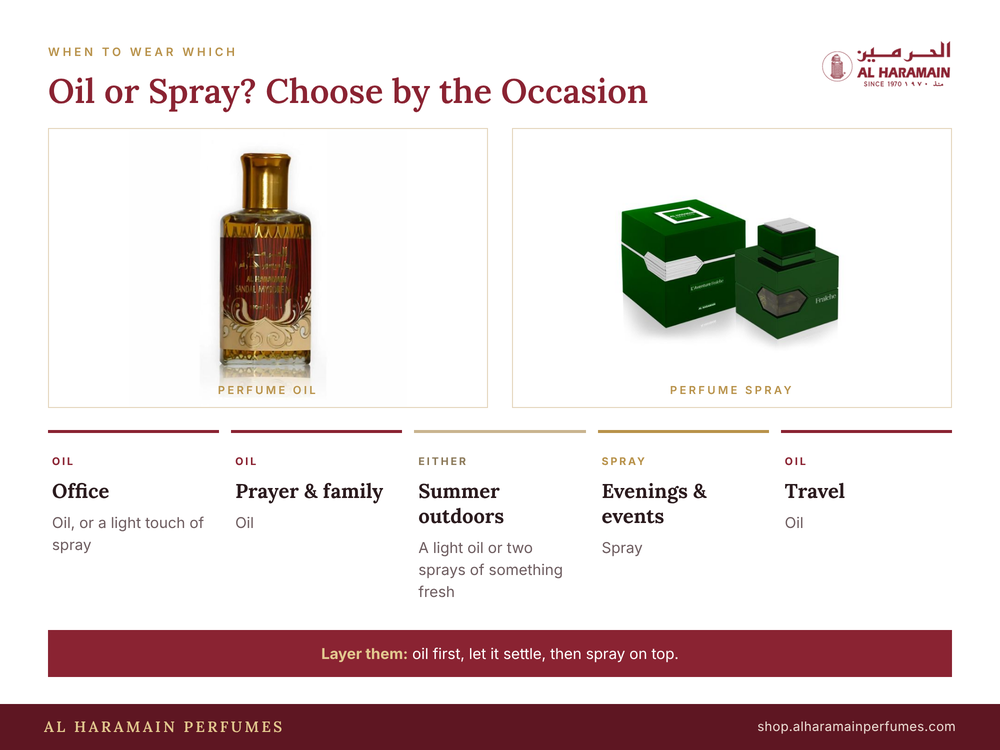
When to Choose Oil and When to Choose Spray
There's no single right answer, but here's a simple way to think about it.
- The office. In air-conditioned offices and shared spaces, an oil or a light touch of spray keeps your fragrance close and considerate.
- Prayer and close family gatherings. A small amount of oil is the traditional choice and stays respectful in close company.
- Summer days outdoors. Choose fresh, lighter scents and apply less. A light oil on cooler spots or two sprays of something fresh works well.
- Evenings, weddings and events. This is where sprays shine. Their projection makes a fuller impression in larger rooms.
- Travel. Oils win here. They're small, they fit in a bag, and you can top up discreetly.
How to Apply Each the Right Way
Perfume oil. Dab or roll a small amount onto your pulse points: the wrists, the base of the throat and behind the ears. Don't rub your wrists together, because the friction warms and breaks up the fragrance faster. Let it settle into your skin for a minute before you get dressed.
Perfume spray. Hold the bottle a short distance from your skin and spray once or twice on your pulse points and chest. In the UAE heat, fewer sprays usually work better than more. If you like fragrance on clothes, test a hidden area of the fabric first.
Layering Oil and Spray Together
Layering is common across the Gulf, and it's one of the best ways to get the closeness of an oil with the presence of a spray. Apply the oil first and let it settle, then spray on top. The oil gives the fragrance a lasting base, and the spray adds lift and projection.
You can layer the same scent in both formats, or pair fragrances from the same family: an oud oil under a woody spray, or a musk oil under something floral. Start with a small amount of each until you find a balance you like.
Frequently Asked Questions
Are perfume oils stronger than perfume sprays?
Perfume oils are usually concentrated, so in terms of fragrance content they can be just as strong as a spray, or stronger. They don't feel as strong because they stay close to the skin instead of projecting into the air. If you want people to notice your scent from a distance, a spray will do that better. If you want something rich but personal, an oil is the better fit.
Should you rub perfume oil into your skin?
No. It's tempting to rub your wrists together after applying an oil, but the friction heats the fragrance and can make the lighter notes fade faster. Simply dab or roll the oil onto your pulse points and let it settle on its own for a minute. If you've applied too much, press gently with a tissue rather than rubbing it in.
Is perfume oil better than eau de parfum?
Neither is better overall. They're different ways of wearing fragrance. An eau de parfum gives you a stronger opening and a wider scent trail, which suits evenings and events. A perfume oil gives you a closer, slower-fading scent that suits the office, prayer and travel. Many people own both and choose based on the day. If you're unsure, try both versions of a fragrance in a showroom.
Can perfume oil stain clothes?
It can, particularly on light-coloured silk, cotton and other delicate fabrics. The safest approach is to apply oil to your skin, not your clothing, and give it a minute to absorb before you get dressed. Keep oils away from collars and cuffs on white garments. If you want to scent your clothes, a spray from a distance or bukhoor is usually the gentler option.
Is perfume oil good for sensitive skin?
It depends on the person and the fragrance. Some people find oils more comfortable than alcohol-based sprays, but any fragrance, oil or spray, can cause a reaction in sensitive skin. Before wearing a new perfume oil regularly, test a small amount on the inside of your arm and wait a day. If you have a known skin condition or allergy, check with a doctor or pharmacist first.
Which is better for hot weather in the UAE?
Both can work in the heat if you choose and apply them carefully. Light oils applied to cooler spots stay close and don't become overwhelming. Fresh sprays work well if you use fewer sprays than usual. Look at fresh fragrances for daytime in summer, and save heavier oud and amber blends for cooler evenings or air-conditioned spaces.
Final Thoughts
The oil-versus-spray debate doesn't really have a winner. Oils are quieter and slower to fade, and they come with centuries of tradition in this part of the world. Sprays are brighter and more noticeable, and easier for a quick spritz on the way out. The right choice depends on where you're going, how warm it is and how close you want people to be before they notice.
The best way to decide is to try both. Visit an Al Haramain showroom, wear the oil on one wrist and the spray on the other, and see how each one feels by the end of the day.





-
 Haramain Hayati, 12ml, Concentrated Perfume Oilwas AED 385.00 Special Price AED 210.00
-