The Most Expensive Agarwood in the UAE: Rare Oud Worth Millions of Dirhams
In most oud shops in the UAE, agarwood is sold by the gram or the tola. But a few pieces are never weighed out at all. They are kept in glass cases, shown at exhibitions and valued in millions of dirhams, and their owners talk about them the way collectors talk about rare gems.
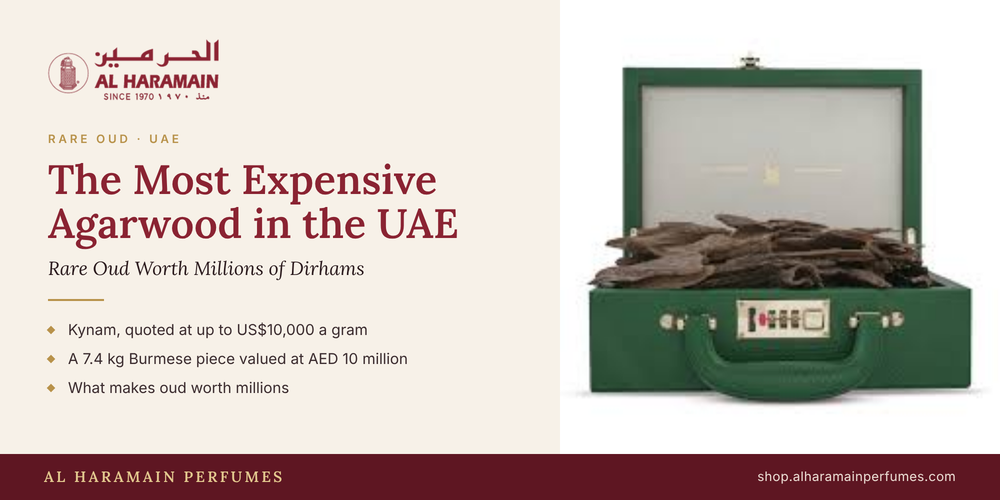
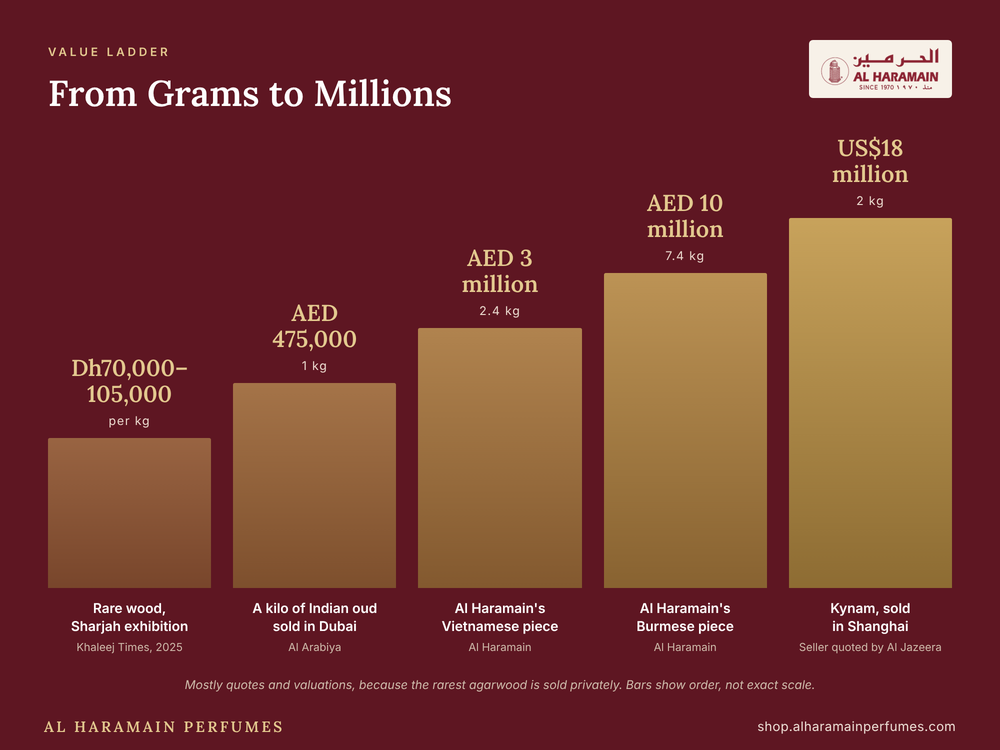
So what is the most expensive agarwood? Worldwide, the answer is Kynam, which has been quoted at up to US$10,000 per gram. In the UAE, rare oud wood has been quoted at Dh70,000 to Dh105,000 per kilogram at the Emirates Perfumes and Oud Exhibition, and a single kilo of Indian oud was reported sold in Dubai for about AED 475,000. At Al Haramain Perfumes, one natural Burmese piece weighing 7.4 kg is valued at AED 10 million. This guide looks at these pieces, and at what makes a piece of wood worth so much.
The Most Expensive Agarwood at a Glance
| Agarwood | Price or value | Source |
|---|---|---|
| Kynam (per gram) | Up to US$10,000 (about AED 36,700) | Oud seller quoted by Al Jazeera |
| Kynam, 2 kg sold in Shanghai | US$18 million | Oud seller quoted by Al Jazeera |
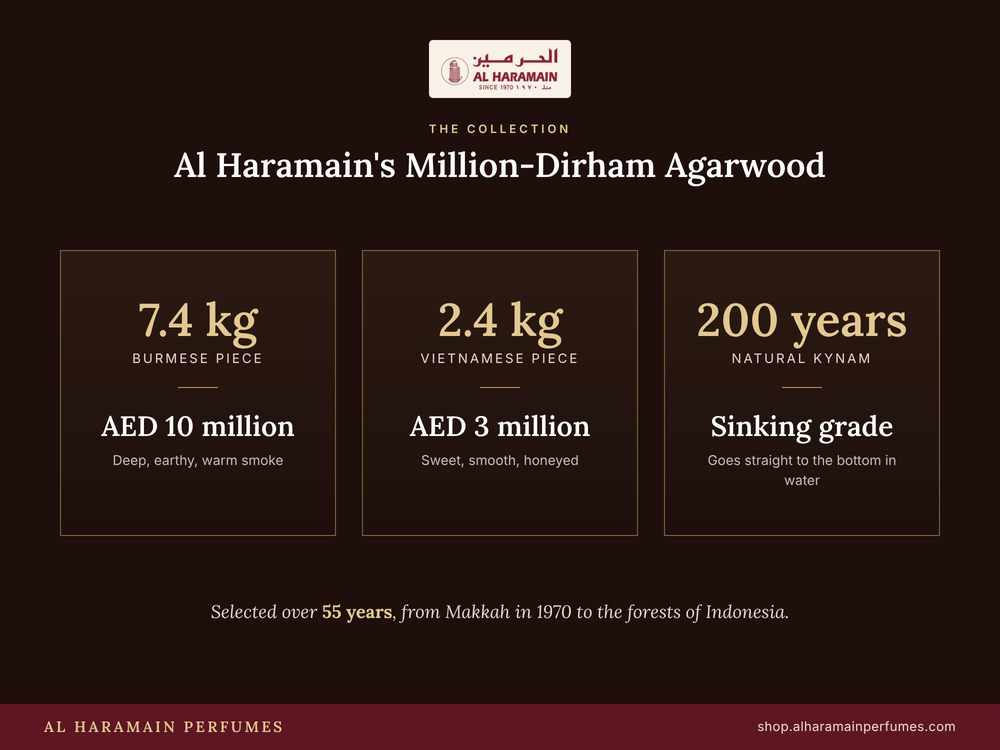
| Al Haramain's Burmese piece, 7.4 kg | AED 10 million | Al Haramain |
| Al Haramain's Vietnamese piece, 2.4 kg | AED 3 million | Al Haramain |
| A kilo of Indian oud sold in Dubai | About AED 475,000 | Dubai oud retail manager quoted by Al Arabiya |
| Rare wood at the Sharjah oud exhibition | Dh70,000 to Dh105,000 per kg | Khaleej Times, 2025 |
| Al Haramain Kinam Oudh Oil, 5 ml | US$5,250 (about AED 19,300) | Al Haramain global online store |
Most of these figures are quotes and valuations rather than published sale prices, because the rarest agarwood is usually sold privately. Even so, they show how far the very top of the market sits above everyday oud.
What Makes One Piece of Agarwood Worth Millions?
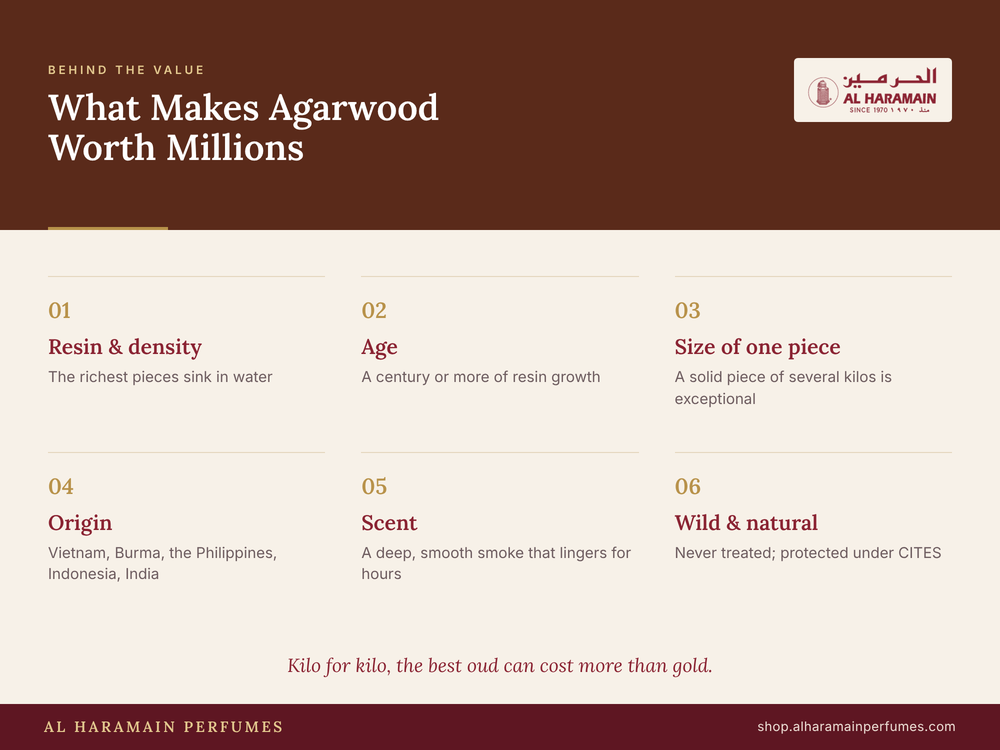
Two pieces of agarwood can be the same size and differ in value a thousand times over. These six factors explain why.
Resin Content and Sinking Density
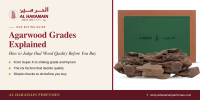
Agarwood is valuable because of its resin, the dark, fragrant substance an Aquilaria tree produces to protect itself after it is wounded and infected. The more resin a piece holds, the darker, heavier and more fragrant it is. The richest pieces are so dense that they sink in water, which is why sinking-grade wood is the most prized. If you'd like to understand how this fits into grading, Al Haramain's guide to agarwood grades explains it in detail.
Age
Resin builds up slowly. The most valuable agarwood comes from old wild trees, where the resin has had a century or more to develop. That depth of scent cannot be rushed, and no plantation can produce it in a few years.
The Size of a Single Piece
Resin forms in patches around old wounds in the tree, so most agarwood reaches the market as chips and slivers. A single solid piece weighing several kilograms is exceptional, and size multiplies value far beyond the price per gram.
Origin
Some origins are rarer and more sought after than others. Vietnamese wood, the home of Kynam, sits at the top, along with prized wild wood from Burma, the Philippines and parts of Indonesia and India.
Scent
In the end, agarwood is bought for its fragrance. The most valuable pieces give a deep, smooth and complex smoke that lingers on clothes and in a room for hours. Two pieces can look alike and smell very different, which is why experienced buyers always judge by scent.
Wild, Natural Wood
The rarest agarwood is natural and wild, never treated or artificially darkened. Wild trees are protected under CITES, the convention that controls international trade in endangered species, which limits legal supply and adds to the value of old wild wood.
Is oud more expensive than gold? Kilo for kilo, the best oud can be. Rare wood quoted at Dh100,000 per kilogram, a kilo of Indian oud reportedly sold for about AED 475,000, and Kynam quoted at thousands of dollars per gram all show why the comparison is so often made.
Kynam: The Most Expensive Agarwood in the World
What Kynam Is
Kynam, also written Ky Nam or Qi Nan, and known in Japan as Kyara, is the rarest and most expensive grade of agarwood. Unlike ordinary agarwood, which needs heat to release its scent, Kynam is soft, extremely rich in resin and fragrant even at room temperature. Very little is found each year, mostly from old wild trees in Vietnam.
How Much Kynam Costs
Kynam prices are extraordinary. An oud seller told Al Jazeera that Kynam can cost $10,000 for one gram, and described a sale in Shanghai in which two kilograms changed hands for US$18 million, about US$9 million per kilogram. These are seller accounts rather than public records, but they give a sense of the level at which true Kynam trades.
Why Kynam Is So Rare
Kynam forms only in a tiny number of old wild trees, and there is no way to tell from the outside whether a tree holds it. It cannot be cultivated, and it can only be identified by its scent. That combination of scarcity and uncertainty is what keeps it at the very top of the market.
The Most Expensive Oud Wood in the UAE
Prices at the Emirates Perfumes and Oud Exhibition
The UAE's biggest oud event, the Emirates Perfumes and Oud Exhibition at Expo Sharjah, gives a rare public view of top prices. In 2025, sellers quoted these prices per kilogram, as reported by Khaleej Times:
- Tarakan (Indonesia): about Dh105,000
- A Philippine variety: more than Dh100,000, up from about Dh10,000 in 2017
- Imphal Super (India): about Dh85,000
- Malino: about Dh70,000
The Philippine example stands out. A roughly tenfold rise in under a decade shows how quickly prices for the best wood can climb as wild supply shrinks.
A Record Sale in Dubai
Single sales can go much higher. In an Al Arabiya report on oud in the Gulf, a Dubai oud retail manager said he had seen a kilo of Indian oud sold for nearly AED 475,000, and noted that a kilo of oud can cost as much as a kilo of gold, sometimes more.
Why the UAE Pays Some of the Highest Prices
Few places value oud as highly as the UAE. It is burned to welcome guests in the majlis, worn for Friday prayer, and central to weddings, Eid and National Day celebrations. Rare pieces are also given as royal and corporate gifts and kept by collectors. Strong demand for the very best wood, combined with limited wild supply, keeps the top of the UAE market among the highest in the world.
Al Haramain's Million-Dirham Agarwood
Al Haramain began as an agarwood trader near Al Haram Mosque in Makkah in 1970, and over more than 55 years it has built a collection that includes some of the rarest pieces shown in the UAE.
The 7.4 kg Burmese Piece
The collection's best-known showpiece is a natural piece of Burmese (Myanmar) agarwood weighing 7.4 kg and valued at AED 10 million, about US$2.72 million. That works out at roughly AED 1.35 million per kilogram. Burmese agarwood is known for its deep, earthy and warm smoke, and a solid piece of this size is exceptionally rare.
The 2.4 kg Vietnamese Piece
A second showpiece, a 2.4 kg piece of Vietnamese agarwood, is valued at AED 3 million, about US$817,000, or roughly AED 1.25 million per kilogram. Vietnamese wood is prized for its sweet, smooth and honeyed character.
The 200-Year-Old Sinking Kynam
Al Haramain's finest piece is a natural Kynam from the forest, about 200 years old. It is sinking grade: placed in water, it goes straight to the bottom. Only wood that has built up resin over generations can do that.
How Rare Pieces Are Found
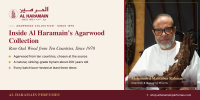
Pieces like these are not ordered from a catalogue. The chairman, Mohammed Mahtabur Rahman, has spent 50 years selecting agarwood and amber, and he personally visits forests in Kalimantan, Sumatra and other parts of Indonesia to find rare raw material, some of it in places that take weeks to reach. Every piece is then sorted and tested before it joins the collection. You can read more in the story of Al Haramain's agarwood collection.
The Most Expensive Agarwood by Origin
| Origin | Why it is prized | Example of top value |
|---|---|---|
| Vietnam | Home of Kynam; sweet, honeyed wild wood | Kynam quoted at up to US$10,000 per gram; Al Haramain's 2.4 kg piece valued at AED 3 million |
| Burma (Myanmar) | Deep, earthy, warm smoke; large natural pieces | Al Haramain's 7.4 kg piece valued at AED 10 million |
| Philippines | Sweet, clean wood; increasingly scarce | More than Dh100,000 per kg at the 2025 Sharjah exhibition |
| Indonesia | Rich wild wood from Tarakan, Kalimantan and beyond | Tarakan at about Dh105,000 per kg |
| India | Strong, deep Hindi oud | Imphal Super at about Dh85,000 per kg; a Dubai kilo sale of about AED 475,000 |
| Cambodia | Fruity, sweet, balsamic | Prized for premium chips and oils |
Several of these origins are available in everyday and premium grades in Al Haramain's agarwood collection.
The Most Expensive Oud Oil
Oud oil can be even more precious than the wood, because so much wood is needed to make so little oil. According to Euronews, a kilogram of oud wood yields only about 1 ml of resin, and in 2019 it reported that a 12 ml bottle of high-quality oud could cost up to €2,700.
At the top of Al Haramain's own range is Al Haramain's Kinam Oudh Oil, a wild A+++ grade oil listed on the global online store at US$5,250 for just 5 ml at the time of writing. For a wider choice of pure oud oils, from first bottles to aged ateeq oils, see Al Haramain's Dehnal Oudh range.
Who Buys the Most Expensive Agarwood?
The very top of the market is small, and its buyers usually fall into a few groups:
- Collectors, who value rare origins, age and sinking-grade wood.
- Royal and corporate gifting, where a rare piece or a fine oil marks an important occasion. For more everyday gifting, Al Haramain's gift sets offer a wide range.
- Weddings and family occasions, when families choose their finest oud for guests.
- Heirloom keepers, who pass rare pieces down through generations.
Prices for rare agarwood have risen over time as wild supply has shrunk, but agarwood is a natural material whose value depends on its quality, condition and demand. Anyone buying at this level should rely on expert advice and documented provenance. For a broader view of everyday prices, Al Haramain's agarwood price guide explains costs by grade, origin and form.
How to Buy Rare Agarwood Safely in the UAE
At the top of the market, the cost of a mistake is high. These steps help protect you.
- Ask about provenance. Where was the wood found, and how did it reach the seller?
- Ask for documented, legal supply. Agarwood is protected under CITES, so reputable sellers trade it with the proper permits and records.
- See and smell the piece in person. Never buy rare agarwood from a photo alone.
- Burn-test a small sliver. Good wood gives a smooth, rich, lasting smoke.
- Check the weight and the water test. High-resin wood feels heavy and the best pieces sink.
- Be wary of bargains. "Kynam" or "sinking grade" at a discount is a serious red flag.
- Get a detailed receipt. It should record the origin, weight, grade and price.
- Buy from an established house. Experience in grading and long-term relationships with suppliers matter most at this level.
Frequently Asked Questions
What is the most expensive agarwood in the world?
Kynam, also known as Ky Nam, Qi Nan or Kyara, is the most expensive agarwood in the world. An oud seller quoted by Al Jazeera put its price at up to US$10,000 per gram, and described a sale of two kilograms in Shanghai for US$18 million. It is soft, extremely rich in resin and fragrant even without heat, and very little is found each year, mostly in Vietnam. Below Kynam, large sinking-grade pieces from rare wild origins are the most valuable.
How much does the most expensive oud cost in the UAE?
The most expensive oud in the UAE can reach millions of dirhams for a single piece. At the 2025 Emirates Perfumes and Oud Exhibition in Sharjah, sellers quoted Dh70,000 to Dh105,000 per kilogram for rare wood, and a Dubai oud retail manager told Al Arabiya he had seen a kilo of Indian oud sold for about AED 475,000. Al Haramain's 7.4 kg Burmese showpiece is valued at AED 10 million.
Is oud more expensive than gold?
Kilo for kilo, the best oud can be more expensive than gold. Rare wood has been quoted at around Dh100,000 per kilogram in the UAE, and Kynam has been quoted at up to US$10,000 per gram. Everyday oud chips, however, are far more affordable, so the comparison only applies to the very top of the market. Grade, origin, age and resin content decide where a piece sits.
What is Kynam, and why is it so expensive?
Kynam is the rarest grade of agarwood, formed in a tiny number of old wild trees, mostly in Vietnam. It is soft, extremely rich in resin and fragrant even at room temperature, unlike ordinary agarwood, which needs heat. It cannot be cultivated, and there is no way to tell from outside whether a tree contains it. That rarity and uncertainty make it the most expensive agarwood in the world.
What is the most expensive oud oil?
The most expensive oud oils are distilled from rare wild wood, especially Kynam, and aged for years. Because about a kilogram of wood yields only around 1 ml of resin, according to Euronews, prices can be very high: Euronews reported a 12 ml bottle of high-quality oud at up to €2,700 in 2019. Al Haramain's Kinam Oudh Oil (Wild A+++) is listed at US$5,250 for 5 ml on its global online store.
Why does sinking agarwood cost more?
Sinking agarwood holds so much resin that it is denser than water, so it sinks instead of floating. Resin is what gives agarwood its fragrance, so sinking wood has the richest, longest-lasting scent. It also takes many years of slow resin growth to form, which makes it rare. That combination of quality and scarcity is why sinking-grade wood commands the highest prices after Kynam.
Where can I see rare agarwood in the UAE?
Rare agarwood is often shown at events such as the Emirates Perfumes and Oud Exhibition at Expo Sharjah, where oud houses display their finest pieces. Al Haramain also shows rare agarwood at fragrance exhibitions. For a closer look at rare and collector pieces, contact Al Haramain's oud team on WhatsApp at +971 6 748 0555.
Can I buy collector-grade agarwood in the UAE?
Yes. Established oud houses in the UAE sell premium, sinking-grade and collector agarwood alongside everyday grades. Al Haramain holds agarwood from ten countries, from everyday chips to sinking-grade pieces, and its oud team can advise on collector pieces. Always see and smell the wood in person, ask about its origin and buy from a seller with documented, legal supply.
Final Thoughts
The most expensive agarwood in the world is measured not just in dirhams, but in decades. Kynam that is fragrant without heat, a 7.4 kg Burmese piece valued at AED 10 million, wild wood quoted at Dh100,000 per kilogram: each one is the result of resin built slowly inside a tree over generations. Few buyers will ever own a piece like this, but understanding what makes it so rare will help you choose better oud at any price. To see the range for yourself, browse the full agarwood range at Al Haramain Perfumes UAE or contact the oud team on WhatsApp at +971 6 748 0555.